



This essay contains spoilers for various seasons of the survival reality television series Alone. Read at your own peril.
A few weeks ago, the New York Times “The Opinions” podcast released a moderated conversation with leftist streamer Hasan Piker and New Yorker writer Jia Tolentino.1 The discussion was conducted in the troll-y register of three people bullshitting about a serious topic, the way roommates sharing a dorm room might after a long night of bong hits. They mused their way through somewhat absurd and relatively low-stakes examples, like whether it’s immoral to shoplift produce from a corporation that exploits its workers. What does it mean to “live ethically” in an “unethical society,” the moderator wanted to know, invoking the example of using DoorDash when the weather’s bad.
I was only made aware of this dispatch from the paper of record because of the spirited follow-up discussion it inspired, including one particularly well-argued essay by Anastasia Berg called “Shooting and Crying” that criticized the tendency to “indulge with one hand” what you “disavow with the other,” creating a sort of ethical gotcha where the “moral injury” you supposedly sustain by participating in the thing you find objectionable absolves your participation. This, Berg says, adds “the insult of self-pity to the original injury,” or, as Katy Waldman memorably put it in 2020, is like asking to be “rewarded for the moral work of feeling bad.”
The first thing I thought when I encountered all this was: What a tremendous opportunity to talk about my favorite show, Alone.
Now in its 12th season, Alone is a reality series that depicts the fantasy and folly of the idea that every man is an island. On each season, 10 contestants are dropped somewhere in the remote wilderness—lately, the show has seemed to favor the inhospitable Arctic Circle—to live in isolation (“alone”) for as long as possible. Participants chatter to their cameras, Wilson-style, in such a friendly and constant manner that viewers get the impression the camera itself becomes a tether to sanity. Almost all of the footage the viewer sees comes from these self-recorded transmissions.
Each contestant is allowed to bring 10 items2 to help them survive, their first strategic choice in the gameplay. They are always dirty, often starving, and usually one accident away from being involuntarily medically extracted or voluntarily “tapping out” via satellite phone. Thomas and I like to watch after we’ve just eaten dinner, buried under blankets on our couch next to the fire with a spread of desserts within arm’s reach.
Alone, like its parodic predecessor Survivor, is a game of strategy—but because there are no other humans to contend with (beyond those you must outlast), the biggest challenge is survival itself. A 2024 Vulture review by Nicholas Quah called it “an exercise in controlled dying.” Life on Alone is about navigating a harrowing cascade of tradeoffs, managing that mysterious mix of desire and reason to arrive at a defensible choice.
Some survivalists prioritize building a log-cabin-style shelter, despite the steep caloric cost (matter-of-fact blurbs appear in the lower left-hand corner of the screen which say things like, “Roland is expending 500 calories per hour”), betting that when temperatures drop below 0 degrees, the creature comforts of a properly insulated shelter will be worth the risk of burning so much fuel in the warmer months. Often there’s someone whose camp location just so happens to be excellent for fishing; one contestant will have 70 pounds of trout and white fish smoking at camp while another returns, day after day, to an empty gill net, patience wearing as thin as their food reserves while the temperatures drop. It’s a remarkable simulation of the combination of merit and dumb luck that shapes outcomes back in civilization.
There is, naturally, prize money involved. Typically, the prize is $500,000, a sum that feels modest compared to the extreme nature of the challenge (Survivor offers $1 million).3 The early episodes of every season provide a glimpse of each contestant’s home life and a sense of what they intend to do with the money should they win. Because of the nature of the show, those capable of hacking it alone in the arctic winter for months are less casual R.E.I. members than professional survivalists. In their preshow interviews, most talk about their homesteads or enthusiastically demonstrate the ways in which they’re already living off the land.
Yet participants mention, with striking frequency, that the prize money will help them achieve their desired lifestyle. What type of lifestyle do they want, I find myself thinking whenever we reach that inevitable point in the voiced-over homestead tour, that they need half a million to buy it?4 Every time the contestants are dropped in the middle of nowhere and proceed to giddily forage their stretch of woods with nothing but a handful of basic tools, I wonder whether the $500,000 windfall might, paradoxically, present more in the way of obligation and distraction than the opposite.
The prize money is, it turns out, a somewhat contentious part of the experience. The initial crop of Season 1 survivalists signed up without knowing about it. They were only told in the days leading up to the “drop,” when they’d be deposited at their remote camp sites. “Some were stoked; some were bummed,” one Season 1 contestant reportedly told Quah. “You’re out there having these really powerful moments, but then there’s this cash bag always floating around in your mind.” For some, it seems, there’s something so pure about this test of resolve that being motivated by $500,000 can actually cheapen the experience.5
This essay is continued after a message from this issue’s sponsor…

Couches are almost always priced like investment pieces, so committing to The One can be a big gamble. Instead of replacing your couch every several years because you’ve moved spaces or your lifestyle has changed, why not buy a couch designed to be adapted forever? That’s the logic of the Lovesac Sactional, the modular sectional from Lovesac that can change size, shape, or even material, depending on your needs.
If Present You needs a couch that survives pets, movie nights with friends, and chaos, but Future You ends up with a baby and a bigger living room, it’s the rare investment piece of furniture that doesn’t become an immediate regret as soon as life changes.
Each base and back piece can be separated and rearranged as your heart desires, and every cover can be easily removed and tossed in the wash if you also happen to share your couch with animals who demonstrate very little regard for the sanctity of your family room furniture.
If you’re in the market for a new couch that fits the needs of Present and Future You, check out the Lovesac Sactional.
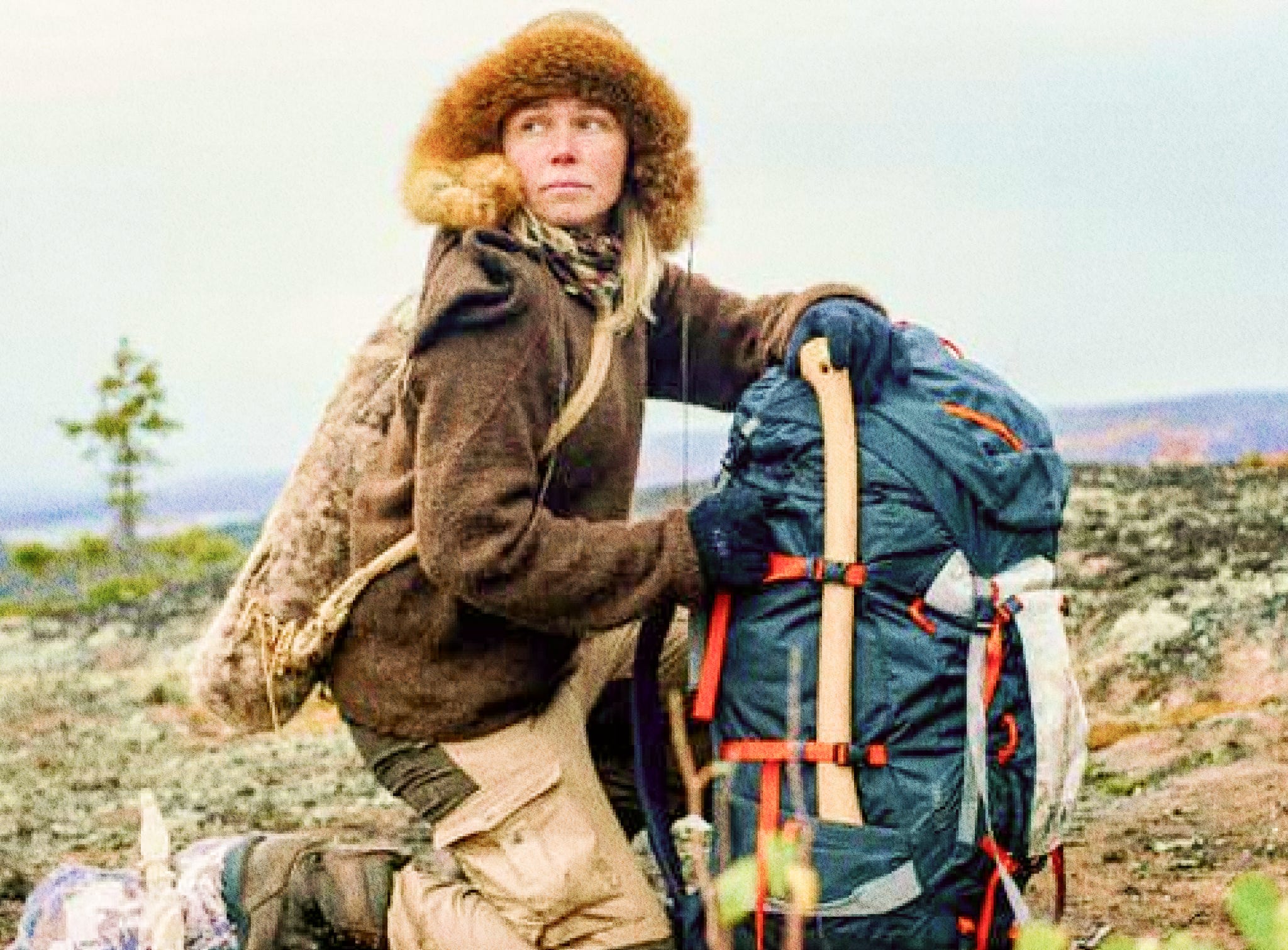
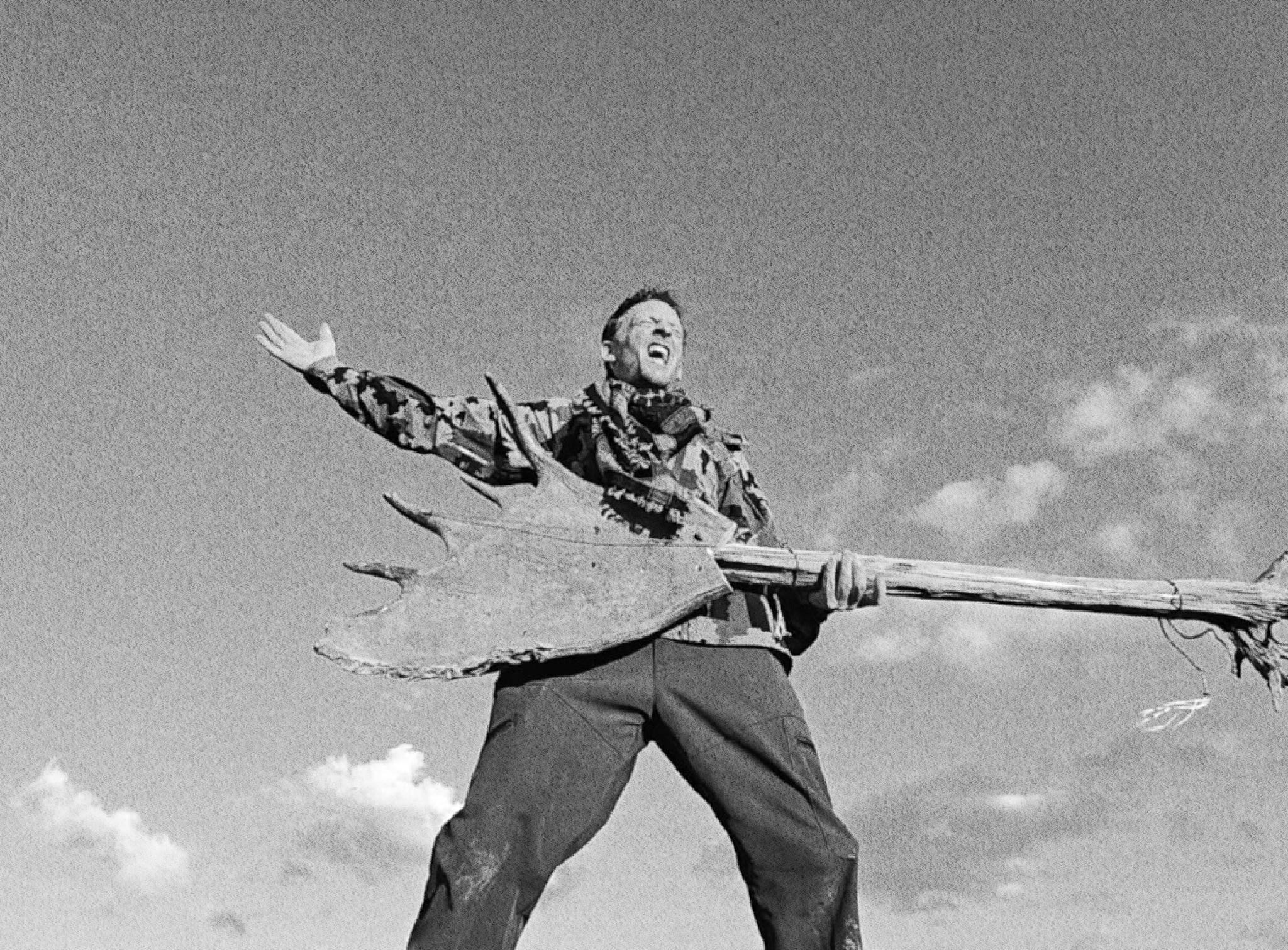
Some players, like Season 11’s winner, a man named William from Labrador, appear to be engineered for this specific challenge. While other contestants are battling frostbite, William frequently appears in his segments bent over a food cache, ass hanging out the bottom of a flimsy raincoat, seemingly unaware of the strip of pink skin exposed to the subzero temperatures. He engages in a protracted, good-natured battle of wills with a wolverine he nicknames Sassy who keeps raiding his fish storage. Then there’s Timber, a stunning example of nominative determinism, who emerges as particularly skilled at both bushcraft and antics, at one point using his point-and-shoot cameras to create a music video where he plays a “guitar” he fashioned out of woodsy detritus. He’s always inventing new games, doing bits, or building some contraption that I’d be unable to duplicate if given an unlimited budget and team of personal shoppers at Home Depot.
Toward the end of Season 11, when only William and Timber remain, a familiar weariness sets in. At this end stage, after so much has been endured, it’s hard to root for one participant over another. The stakes feel more acute now that the prize is so tantalizingly close, especially when the ways in which the money might change someone’s life are readily apparent. We learn that Timber was raised in an off-the-grid survivalist cult (!) in Indiana, and he speaks often about his partially self-funded humanitarian work in conflict zones. He mentions his family’s “shoestring budget,” and specifies that he wants to buy a house so his sons have a place to call home between stints abroad.
Throughout his 83 days in the arctic, he also talks openly about his faith, a trait which polarized Alone superfans. (The r/AloneTV subreddit speculated that he was alternately a “secret missionary” or CIA operative.) He makes frequent appeals and references to God and, at one point, sacrifices part of a fish on a makeshift ice-block altar—a fish whose calories he badly needs—in solidarity with people who are starving without the option to eject from their situations. It’s a decision for which there’s no rational justification, only a spiritual one.
In the final episode, Timber sits in the hazy, grayscale glow of his cave-like shelter, reflecting on his experience; the way his joy blunted as the land around him froze (though in a later video posted to YouTube, he admits that he felt somewhat numb for the “first 40 days”—a Biblically significant amount of time, I noted—while he processed what sounded to me like PTSD). Sitting in the darkness, he seems to be wrestling with a crisis of meaning for the first time all season.
“I’ve received everything I asked for out here, except the money,” he reflects. “I have a vision for the future. I know what’s next for our family, and I’m ready to get that life started. I could make this go on much longer, but all I’d be thinking about each day is the money, and trying to impress people, or something, and I don’t need to prove anything. I am who I am,” he says. You can almost see the moment of enlightenment arrive on his gaunt, dirty face. The symbolism of the cave, that site of Plato’s famous allegory and handy metaphor for illusion and truth, is almost too on the nose here.
The screen suddenly fills with the bluish white of the arctic afternoon as Timber climbs into the light, satellite phone in hand, the telltale sign of a participant about to tap out. Groans erupted from my living room. As he fiddles with the satellite phone, seemingly having second thoughts, suspenseful music swells in the background. He finally clicks it off. “I can’t do it,” he announces, “not today,” to whoops and cheers from the warm, well-fed peanut gallery on my couch. But the relief is short-lived, because we find ourselves again in Timber’s shelter just one scene later. It’s the next day. He’s still gnawing on the jerky made from a moose he shot on day 14. Only four other contestants in Alone history have made it this long, a chyron tells us. Timber is painfully close to the $500,000 he had planned to use to establish his sons’ home base.
“I’m enjoying this enough, and in good enough health, that I could easily do this to 100 [days],” he says, “but it’s just kind of going on and on, just for…for what? For money.” He seems to identify a motivation he finds unsettling. “What if I go ahead and win this money?” he asks no one. “What’ll happen to me in my work that I’ve dedicated my life to? [...] Would this money create a barrier between me and those very people that I would be trying to help?” Finding the idea of continuing for money alone unsavory, he seems to reason through what it would mean to win: He couldn’t keep the $500,000 for himself knowing the families he meets through his work need to emigrate far more desperately than he needs to own a house, but it would also never be enough to help everyone, and how would he choose? He seems genuinely torn, suddenly weighed down by the prospect.
Timber has arrived at another tradeoff where the rational confronts the spiritual. It would be easy to trot out any number of ready-made justifications for why his financial security wouldn’t undermine his work helping others; that in fact it might enable him to do even more, or do it more comfortably. But there is, clearly, something about the idea of continuing down this path for the money alone that he finds personally unjustifiable, the psychic cost too high: “I don’t want all of this good that I’ve gained [from this experience] to get lost in the meaningless and the suck,” he says, “and I think I’ve received everything, besides the money, that I could possibly receive from something like this.” Continuing on, then, would be a betrayal of something he values more than money.6 He has made his choice.
Most people who tap do so reluctantly, their shame and disappointment palpable. Timber appears at peace. “I’m happier than I’ve been in years,” he tells the camera crew who comes to extract him from the field. “I feel alive. I feel fully alive again.” As a timelapse erases months of evidence of his life in the Arctic Circle in a matter of seconds, we hear Timber’s voiceover: “I want my children to see the true victory in the immaterial things like integrity and joy and resilience. [...] I want them to see those as the real victory, rather than $500,000.” The clarity of this revelation is startling, but even more startling is the swiftness with which he acts on it, how decisively he moves to align behavior with belief.
All the same, watching William’s wife surprise him in the next scene to tell him that he’s won is just as powerful. For William, there is no dissonance between continuing on “for as long as it takes” to win. “My family is everything to me. That’s why I would never quit, because I knew if I was successful, their future is gonna be brighter,” William says in his exit interview, which plays as he and his wife board the chopper back to the world of central air conditioning and the New York Times Opinion section. “Winning this prize—this $500,000—allows us to do things we never thought possible before,” he says.
In Timber and William, we see how money—even the same amount of money, acquired in the same way, by similar people with similar talents and interests—can subvert or support a sense of congruence, and how our relationship to that money can change as we do. Timber realized that pursuing the money would actively thwart something he came to value more, so he left. William viewed winning the money as something he needed to do for his family, so he stayed. Both paths, opposite as they were, reflected the clean, resolute assuredness of internal coherence.
Sometimes a choice that appears to be about money is, in fact, about money. More often, it’s about something else: integrity, self-concept.
Berg ends her “Shooting and Crying” essay with a careful clarification: She’s not moralizing about how people, Tolentino or otherwise, should spend their time, money, or social capital; she would not presume to know whether it’s right or wrong to “drink iced coffee, or fly, or order from Amazon, or do Ballet Barre, or contribute to NYT Opinion,” all things that were implied to be immoral but unavoidable. It would be more productive, she writes, to either stop doing the thing you find objectionable, or find a way to justify it, a recommendation that cuts through the murky, unsatisfying nihilism of the reigning “no ethical [X] under capitalism” framework. Her essay is, ultimately, a case for pursuing coherence.
It calls to mind something a mentor of mine says about making decisions that transcend “right” and “wrong”: You might not love every outcome or implication of a choice you make, but you can “love your reasons” for making it, and loving your reasons can make just about anything—surviving 84 days in the arctic to win $500,000, or leaving after 83 seemingly empty-handed—feel right.

How social media critique functions like a more palatable Trojan Horse for regressive ideas about girls and women. (Diabolical Lies)
Witnessing the lifestyle of “money manifestation coach” Amanda Frances on the Real Housewives of Beverly Hills—the money influencer was added to the cast in the show’s 15th season—has some of her former customers feeling duped. I wasn’t going to watch, but now I have no choice. The “aspiration vs. relatability” spectrum of the “influencing” game is such rich terrain, no pun intended. (The Cut)
Tolentino’s Trick Mirror: Reflections on Self-Delusion is in my “all-time essay collections” hall of fame.
Popular choices include gill nets, cast iron pots, a sleeping bag, an axe, and a knife; many bring a bow and arrows and ferro rods to start fires. It remains to be seen whether I could sustain life in my own house using only these tools.
An anomalous twist in the premise of Season 7 doubled the prize for anyone who could last 100 days.
It’s not that life isn’t expensive, it’s just that their lives in particular do not look all that expensive. These are not the types you’d expect to find lounging poolside at an all-inclusive Ritz Carlton destination abroad or trawling through a Neiman Marcus shoe sale. Surely this betrays some ignorance on my part. “Many participants come from working-class and rural communities,” Quah notes, “back-to-the-land types” who, as a general rule, are not the subject of a television genre which tends to foreground rich, impulsive wanna-be influencers.
In the Scandinavian version of the show, apparently, they compete “for glory alone”—there is no prize money in the Nordic nanny states, where life is less grueling. There’s a Hunger Games-style critique to be made somewhere in here, I’m sure. Another time!
The less charitable interpretation from the Timber H8rs in the subreddit is that he was just tired, cold, and hungry, and invented a super elaborate reason to justify leaving (basically me every time I Irish-goodbye a social gathering at 9 PM). I disagree with their assessment and believe his revelation was genuine. Either way, it made for great television.
Can't believe I read every word about a TV show I've never seen to reveal an ultimate truth. Great stuff!
Ahhh I am so delighted someone else shares my interests of Alone and personal finance! Re: William, I also think it was easy for him to “stay for the money” because he loved it so much out there. You see him volunteer for another season as soon as they tell him he’s won (!) and his wife is like, “yeah no.” I also think it’s kind of hilarious that he finds their tiny sub-5000 population town in Labrador to be too full of hustle and bustle—hence why he wants the cash to move out to his wife’s indigenous community. The way he got those grouse with a stick and noose was WIZARDRY! His accent was also a pure delight. Thanks so much for this post, aside from my rambling about how much I love William.