



This week, I was in the mood to write an original piece connecting a few themes that have recurred consistently throughout the news cycle of the last ~year, but are often treated as disparate. I know some of you are too busy to sit down and read a long essay on a Wednesday morning, so I also recorded an audio version—permission to yap at you on your commute?
🎯 Up first, some quick hits:
There are now 430,000 US households (about .3% of the country) worth $30 million or more. The number of households in this rarefied group has grown faster than the general population. (The Wall Street Journal)
Mortgage rates hit a six-month high of 6.38%. (Freddie Mac)
Donald Trump is adding his signature to all US currency. The bills will begin circulating in the coming months. (Vanity Fair)
The New York cover story about last summer’s flood at Camp Mystic was haunting. Pulitzer contender. I was blown away by how deftly Kerry Howley traversed class, policy, geography, religious fervor, and grief in such a sensitive piece—and the camp’s apparent unwillingness to contend directly with its culpability in the death of 27 campers:
“When somebody says, ‘We’re a family-owned business,’ you think it’s kind of folksy,” Doug Getten [the father of one child who died] told me as his three small dogs caused havoc around us and Jennie wiped tears from her eyes, “and not, like, the Ellisons acquiring Paramount.” (Intelligencer)
My Diabolical Lies cohost caro claire burke’s debut novel Yesteryear comes out on Tuesday. She wrote an essay about the tradwife phenomenon as a little amuse-bouche to prepare the masses to meet her protagonist Natalie Heller Mills (who is Perfect At Being Alive, as the book jacket tells us). This Sunday’s “The Caro Episode” is another pregame. (The Guardian)
Brought to You by Domain Money

If you listened to my “Self-Employment Tea” episode last year, you know that I had to prepare for 2026 by taking a fine-toothed comb to my strategy for the first time in years. After filling out our Wealth Planner and realizing how my accounts had multiplied over the years, I decided it was the perfect opportunity to streamline: to finally consolidate retirement accounts, recommit to monthly investment automations, and check in to make sure my tax and insurance strategy still made sense.
I asked Adrianna Adams, my CFP® at Domain Money, to revisit my plan, but geared toward the unknowns of my new self-employment situation—I wanted her to run several income scenarios based on bad, better, and best projections.
The one question I wanted answered: How much can we spend each month without undermining our future progress, depending on these various scenarios? In other words, give me the optimal investment strategy—but then tell me what I can spend guilt-free without second-guessing myself.
Having that number provided a peace of mind I hadn’t realized I’d been missing since making the switch to a more variable style of work and income.
Their planning process encompasses everything you’d expect from a financial planner, plus more comprehensive services that typically involve expensive fee models:
Guidance around stock options (RSUs, ISOs, and other equity-based compensation plans that can have tremendous upside and tax implications)
Strategic tax preparation in the “Strategic” and “Comprehensive” plan tiers—not just filing, but integration with your financial plan
Done-for-you investment portfolio management (and, the best part, no AUM fees)
🗓️ Lock in current pricing—and keep it forever.
Rigged: Please Consume Responsibly
Or: Katie’s inevitable attempt at a non-moral-panic analysis of the Casino Economy.
What I remember most vividly was the trendline, bobbing uneasily against a jet-black background. The numbers flashing across my greasy iPhone X screen—first red, then green, then red again—represented my first-ever investment outside my workplace 401(k) using an app called Robinhood. I was glowing with optimism. It was 2017.
So much has changed since then that my memory of this moment feels not unlike the opening scene of a horror film where the townspeople welcome the outsiders who will eventually destroy their village in cruel and inventive ways. The trading app, which was founded in 2013, mostly evaded accusations of “gamification” until 2020. The first such instance of “Robinhood” and the term “gamified” appearing in the same piece was a blog post written by Scott Galloway in June 2020, subheadline: Tech’s obsession with addiction will hurt us all. By the end of 2020, the internet discourse hive mind had sputtered to life, and outlets from Bloomberg to Vice were asking whether 19-year-olds unburdened by income, assets, or mature frontal lobes should have access to margin and call options.
A new chapter of this story, which may at first appear unrelated, materialized on Tuesday, March 24: A New Mexico state court held Meta liable for “misleading residents about the safety of apps like Facebook and Instagram.” The civil trial, which began in Santa Fe last month, was based on a questionably devised sting operation in which a profile was confected for a fictional 13-year-old girl (the youngest age formally permitted on the platforms), who was allegedly “inundated with messages and targeted solicitation.” The attorney general claimed Meta failed to protect young users from child predators; a jury agreed. The court assessed $375 million in damages.
The very next day, in California, a jury found Meta and Google liable in a similar case. This time, the plaintiff claimed compulsive social media use as a child led to depression and anxiety as an adult. (A healthy majority of the testimony pertained to emotional and physical abuse the woman suffered at the hands of her mother. Despite that, and perhaps most instructive of this cultural moment, the jury still chose to visit consequences on the social media platforms.)
There are 2,000 more pending lawsuits of this nature, each a splintering hairline fracture in the border wall erected around these digital fiefdoms, intended as much to keep Pesky Ramifications out as to keep users1 trapped inside for as long as possible. This intentionality is a cornerstone of these lawsuits: that the platforms are constructed specifically to engender compulsive use.2 After one ruling, Zuckerberg offered the Sackler defense: “If people feel like they’re not having a good experience, why would they keep using the product?”
The Big Temptation Business Model
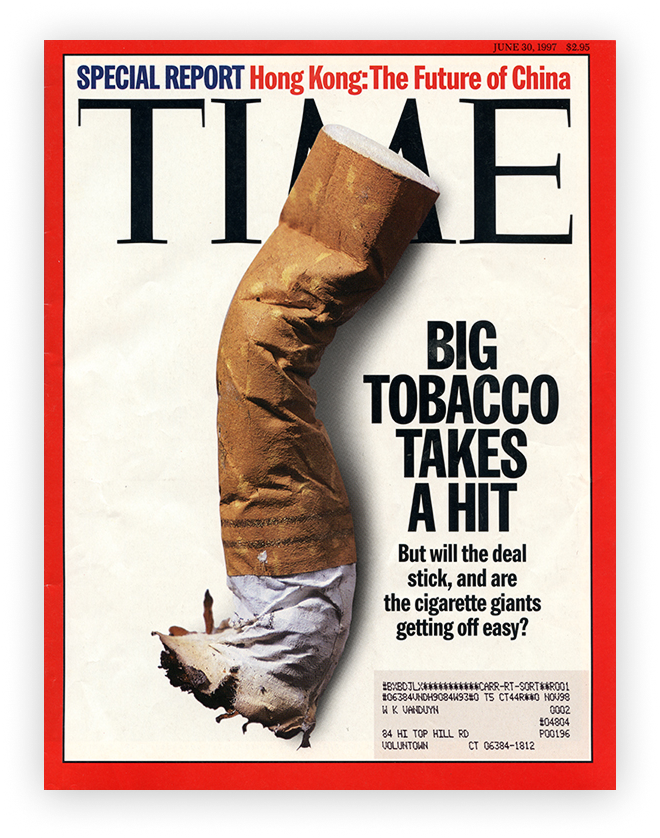
So far, these events have elicited hopeful comparisons to the accountability porn of the sprawling 1990s Big Tobacco trials, or the United States v. Philip Morris case specifically, when tobacco companies were found liable for decades of fraud in public statements about whether cigarettes are bad for you. Most consequentially, they had to restrict advertising, which is basically the 1987 SMU football death penalty of American capitalism. The popularity of this 30-year-old analogue inadvertently underscores how few industries have suffered consequences anywhere near as comprehensive in the intervening three decades.
The comparison also carries a somewhat dispiriting implication. In 2011, legal specialists told the New York Times that the flurry of cases “failed to significantly weaken the industry.” Philip Morris International, after all, is still very much in the game—it sells ZYN, a gangbusters product nestled comfortably against the gums of broccoli-haired Zoomers far and wide, leading Emily Sundberg to declare for GQ in 2025 that it “conquered the American mouth.”
The social media lawsuits’ baseline claim that these products remove natural stopping points and introduce slot-machine-reward mechanisms to encourage compulsive engagement (features not bugs, all) tiptoes up to a broader inconvenient truth. We’ve proven remarkably tolerant of products either explicitly engineered to hook the customer, or for which an outsized share of sales comes from people who end up hooked. It is, of course, perfectly legal to sell addictive products. It’s just illegal to lie about their addictiveness.
Addiction as an outcome is programmed into our economic operating system, as “moderation” and “constant growth” are antithetical goals. What interests me is the nakedness of this conflict between human nature and market incentives, and how this tension has repeatedly shape-shifted in some of the largest financial stories of the last decade.
At the end of every sweaty, strobe-lit commercial for flavored vodka, the alcohol industry’s stamp of plausible deniability flashes across the bottom of the screen: PLEASE DRINK RESPONSIBLY. But if every alcohol customer drank responsibly (defined as “reduc[ing] their drinking to within guideline levels”), researchers in England found that alcohol sales would decline by an estimated 38%. The heaviest-drinking 4% of the population accounts for 30% of all consumption.
Likewise, advertisements for freshly legal gambling apps are inescapable. As a result, nearly half the male population aged 18–49 has an active account with an online sportsbook, reported McKay Coppins in his March cover story for The Atlantic, a piece which chronicled his own accidental (and surprisingly rapid) descent into compulsive gambling.
Like liquor ads, the gambling spots urge us to PLEASE PLAY RESPONSIBLY, and as with the alcohol industry, a sizable portion of sportsbook revenue would evaporate if every customer were capable of following these instructions. In one particularly stark example, a 2024 Wall Street Journal investigation found that 70% of PointsBet’s revenue is generated by just 0.5% of its customers.
Coppins’s descriptions of the way the apps work—like tempting you to transact with “no-lose bets” when they sense you’ve been inactive for a while—call to mind those now-quaint 2020 criticisms of Robinhood3 and its “gamification” of investing, the sprays of confetti erupting festively after every trade and lottery-style stock rewards which, like the sportsbooks, “put a casino in your pocket.”
Up until this point, social media sites have conspicuously deviated from this script; their pitch more of a Sesame Street-flavored Kumbaya about connection and self-expression. There is no acknowledgement of risk, no winking disclosure to SCROLL RESPONSIBLY, as that would imply the existence of an irresponsible scroll.
All of it culminates in an archetypal Big Temptation business model which superficially disavows extreme behavior (PLEASE SNORT OXYCODONE RESPONSIBLY) while simultaneously provoking extreme behavior. It’s hard not to sound reactionary4 when discussing a subject which so easily slides into panicky Puritan moralizing about temperance and discipline, but these are less moral observations than economic ones.
Most notable is the way in which this consumer gamble has universalized across industries: It may be more immediately recognizable as such on day-trading and sportsbook apps, but all of these products and platforms involve an implicit, naive optimism which rhymes with the bettor’s logic: that you can gain something from partaking, then escape unscathed, before something is taken from you.
In Galloway’s six-year-old Robinhood gamification piece, he writes, “I engage with almost every substance or behavior associated with addiction: alcohol, drugs, coffee, porn, sex, gambling, work, spending, devices, and social media. I’ve abused all of them, but I don’t think I’m addicted. On a balanced scorecard, these substances and behaviors, abuse and all, have been a net positive in my life.” Our collective credulity—or a bet on this “net-positive” outcome—is critical for continued participation to appear rational. Still, the inescapable core accounting remains: The bulk of these business models are sustained by those who are losing more than they’re gaining.5
All the World’s a Casino
Smart finance writers have metabolized the Robinhood–DraftKings–Polymarket continuum of the last half decade as the “casino economy,” an app-based nuclear wasteland6 where young people, jaded about institutions and traditional paths to prosperity, have no choice but to apply a degenerate gambler’s mentality to their entire lives. Each piece is an impressionist painting of precarity; you can feel the writer reaching for the same underlying thrust of economic anxiety: distrust, nihilism, speculation. People (especially young men) react destructively to the foreclosing, real or perceived, of legitimate options.

This analysis is, I think, generally correct, but too narrow in scope. It’s not that the rationale driving a person’s relationship with DraftKings is singular in its harm (which seems to be the consensus on that particular issue), it’s that the rationale is already everywhere, mediating all manner of consumer choices, with very little formal intervention. I re-enter into evidence, for dramatic effect: Selling addictive products is legal.
The philosophical question these tech lawsuits are circling, then, is whether our society believes a for-profit actor should be held responsible for its product’s harmful consequences (…when that product, due to its very nature of appealing to our base impulses, makes so much money that it comprises something like 25% of the stock market).
In a purely transactional sense, to smoke, drink, gamble, or use social media is to dabble as a sort of dauntless mark, mouth open PacMan-style munching through a marketplace designed by ghouls who don’t care whether you live or die so long as your Discover card approves. I’ve been on a David Foster Wallace kick lately and just finished Although of Course You End Up Becoming Yourself7, a transcript from a five-day road trip at the end of his 1996 book tour for Infinite Jest. Wallace explains his decision not to own a television: He knows he can’t resist if it’s in the room. (It should be noted that he also chain-smokes and drinks a six-pack of Diet Rite soda each day, a contradiction my husband found unbearable.) In one particularly prescient passage about virtual reality pornography, he tells the reporter:
[T]he technology is just gonna get better and better. And it’s gonna get easier and easier...and more and more convenient and more and more pleasurable...to sit alone with images on a screen...given to us by people who do not love us but want our money. And that’s fine in low doses, but if it’s the basic main staple of your diet, you’re gonna die.
That was 1996.
The issue with the universal injunction to CONSUME RESPONSIBLY is that Meta is the house, Anheuser-Busch is the house, Philip Morris is the house, Kalshi is the house, ad nauseam, ad infinitum, their bottom lines sustained by the very irresponsibility they finger-wag away; by those of us metaphorically hangover-crusted outside the Bellagio staring down a negative number in the Wells Fargo app and asking the nearest stranger for a light. In this consumer landscape, a regulatory crackdown on, say, prediction markets that allow you to bet on which elementary school the United States will bomb next would represent less a preservation of the status quo than a divergence from it.
Tellingly, Americans now borrow a word from gambling parlance—“rigged”—to describe the economy writ large. This aberrant reckoning8 with Meta and Google, then, is indicative of a subtle but important shift in the public’s relationship with this freighted notion of “responsibility”: What if it was the corporation that had to BE RESPONSIBLE for once?
See you next week.

Advertiser Disclosure: Money with Katie is a promoter of Domain, a real client, and receives compensation in connection with sponsorship of the newsletter. This compensation creates a conflict of interest because it may influence the content presented, including the featuring of Domain Money or its advisors. The views expressed by the promoter are their own and do not necessarily reflect the views of Domain Money. This communication is for informational purposes only and should not be construed as a recommendation, offer, or solicitation for the purchase or sale of any security. All financial planning and investment strategies should be tailored to the unique circumstances and objectives of each client.
It’s now an unoriginal observation that tech platforms and drug dealers call their customers the same thing, but I’ll make it anyway.
This is a new legal tack—formerly, cases focused on the content itself, but that approach was a legal loser thanks to Section 230 of the Communications Decency Act, which serves paradoxically as both a longtime favorite defense of tech companies and, as some argue, a bulwark against surveillance and censorship.
Like Meta and Google, Robinhood recently found itself in court for failing to “implement procedures reasonably designed to supervise [its] features and prompts in a manner necessary to protect customers in Massachusetts.”
Here I trust you are, as I am, fondly imagining Speaker Mike Johnson and his son using Covenant Eyes® to monitor one another’s porn usage.
The most devastating “loss” from social media seems harder to clearly identify than, say, a gambling problem or alcoholism, but I must admit a growing part of me feels like it’s a slow leak on our collective sanity and stability, rather than something some people can engage with “healthily” and others can’t.
Presided over, I assume, by President Dwayne Elizondo Mountain Dew Herbert Camacho.
I didn’t realize until I spent more time with his oeuvre the extent to which Harper’s was constantly dispatching this man on People of Walmart reportage expeditions throughout the 1990s.
Even if that reckoning is (a) nascent in scope or (b) misguided in its demands, as those concerned about censorship and surveillance have compellingly and succinctly argued (“Meta bad, but losing Section 230 worse”).
Hi!! This might be a ‘me’ issue but I’m only getting audio into my left earbud. I tested with a podcast and Spotify and can hear through both left + right. Flagging just in case I’m not the only one!
consume responsibly’ but everything is designed so you don’t… got it 😂