


For those keeping score at home, I decided not to send a newsletter last week because I was finishing my book proposal (for real this time), working on a piece for Jacobin, and taking some updated headshots in my office. Here’s my favorite outtake:

Anyway, I wanted to call the Jacobin story “Greek Mythology,” but the clickmongers who package articles went with the more respectable and less cheeky “Greek Life Endures Because It’s a Simulacrum of Solidarity.” It was a treat to work with such a talented editor, former Money with Katie Show guest Meagan Day.
My thesis: Greek life endures despite its obvious costs because it bolsters, rather than threatens, systems of power (a sort of elite reproduction factory). But it’s not as straightforward as you might assume: A review of the literature reveals the benefits for members are overstated and tenuous. Reflecting on my experience on campus, I couldn’t stop thinking about Mark Fisher’s Capitalist Realism—and in retrospect it seems to me that so much of Greek life is caught up in a self-mythologizing that makes it hard to analyze clearly.
Here’s an excerpt:
$4,229. That was the cost of joining the University of Alabama’s Delta Delta Delta Panhellenic sorority, affectionately known as “Tridelt” to its members, for the 2025 fall semester. The spring semester will run you another $4,005, and if you’d like to live in the 44,294-square-foot sorority house that sleeps seventy-eight, add another $2,886 in the fall and $2,490 in the spring.
This is, as Alabama sororities go, on the affordable side. The most expensive sorority, Zeta Tau Alpha (or simply “Zeta,” for those in the know), estimates that a full school year of dues and in-house living totals $19,898, or nearly double the average in-state tuition at an American public university. The cost includes room and board, which is fitting, because Greek life tends to be all-consuming. You will learn to eat, sleep, and breathe it.
I was a ’Bama Tridelt from 2013 to 2017, a few years before the “Bama Rush” phenomenon barnstormed TikTok like a wealthy, white, womanly NFL draft of indistinguishable twangy freshmen. In my day, the dues were closer to $6,000 per year if you lived out of the house. I remember this clearly because, after learning the cost, my parents told me in no uncertain terms that the only reason I could join a sorority was that my scholarship paid for tuition.
I suspect they regretted this almost immediately when I called them, eighteen years old and very drunk, on a bus to our “pledge retreat” — at the four-star resort-cum-convention center in Birmingham where we were whisked hours after receiving our “bids,” or invitations to join — crying about how I felt homesick. But they must have estimated, despite not participating in Greek life themselves, that the economic opportunity it would afford me would be worth the money and trouble. That the $6,000 per year was, in some sense, an investment in my future. They were right.
As the nation reels from yet another fraternity rape story,1 this time out of Cornell, some interlocutors have wondered whether banning Greek life outright might solve the problem, eliminating the most fetid hotbeds of sexual assault on college campuses.
The debate raises plenty of worthwhile questions about institutions’ role in shaping microcultures, the legality and efficacy of outright abolition, and whether fraternities should be understood as a symptom of misogyny and sexual violence or the virus itself. But I have a simpler question: Why, in a culture defined by atomization and largely devoid of any semblance of associational life, has Greek life — at times deadly and destructive — endured? Every year the ranks of those belonging to churches, clubs, leagues, and unions shrink, and yet as evidenced by the fervor of RushTok, the number of new recruits to Greek life continues to rise.
According to a now-archived webpage from, ironically, the Dean’s Office at Cornell University, only two percent of the US population is or was involved in Greek life. But, the page notes, “80% of the top executives of Fortune 500 companies,” “76% of current United States Senators and Congressmen,” “40 of 47 Supreme Court Justices,” and “all but two” presidents were fraternity members. (The page claims the information comes from an undated and unlinked New York Times article, which I was not able to locate. If you poke around enough university agitprop for Greek life, though, you’ll find these phantom stats repeated.) The Cornell missive approvingly dubs this “the power of the 2 percent,” commending fraternities for their “leadership, independence, scholastic achievement and service to their various campuses and communities.”
As a former participant-turned-skeptic, I think fraternities and sororities are better understood as subscription services for access and advantage, a hyperreal allegory for the promises and problems of American capitalism writ large. They are the rare membership-based organization that bolsters, rather than threatens, the power structures that dominate American life, which explains much of their staying power.
Keep reading on Jacobin’s site.


Last week, a subject line in my inbox caught my eye: “Axel Springer acquired a Substack newsletter.”
For those unaware of the sordid state of media consolidation, Axel Springer is the German conglomerate that owns my former employer, Morning Brew. When I worked there, I imagined myself as the tiniest piece in a Matryoshka nesting doll set, swallowed up by the Brew, and then Business Insider, and eventually Springer.
The email was from Emily Sundberg’s newsletter, Feed Me, reporting that the Brew had acquired Express Checkout, a creator brand about consumer packaged goods. Express Checkout’s announcement (“This is the wildest, most exciting moment of our careers”) transported me back to my kitchen counter on an unseasonably warm December day in 2021, where I agreed to DocuSign’s digital signature terms and would’ve described selling to Morning Brew in much the same language. (I wrote about my decision to move on in January of this year.)
I was startled to feel wistful reading their news—not for the particulars of what a deal like that means, but for the heady sense of certitude it brings. Even though the acquisition was the beginning of a years-long contract, it felt more like an ending: the end of wondering if I was going to “make it” as a personal finance writer (what was this development, if not incontrovertible proof that I had?), the end of worrying about money (after my three years were up, at least), the end of taking on too much work at once (turns out this one’s just an incurable character flaw).
But the same irrepressible curiosity that once drew me to the financial planning world eventually drew me away from it. After cresting the Dunning-Kruger curve’s highest peak and plunging down the other side, I learned that building a personal finance empire wasn’t what I wanted after all.
I’ve been reading Revolutionary Road (more on that below), a haunting novel about a couple who have “lived on the assumption that greatness is only just around the corner,” as its jacket copy reads. I think momentous professional triumphs of this sort are most valuable in that they induce the sigh of relief that such a corner has finally been turned. It’s only right about now, five years on, that I realize the road really does just keep going.

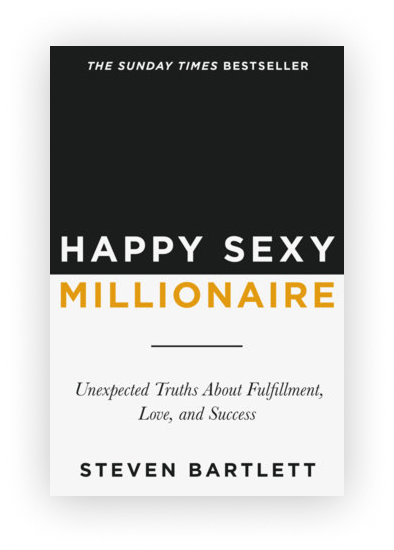
It has come to my attention that I missed one a few weeks ago in my “Main Street Millionaire” breakdown—and by that Diary of a CEO guy, no less.
More on Richard Yates’s Revolutionary Road (1961): What an unbelievably realistic psychodrama about suburban malaise, self-deception, and mediocrity. Can’t wait to see how all this blows up. The casual misogyny in the characters’ internal monologues (and the fact that most scenes involving women feature them alternately “preparing dinner,” fawning over the male characters, or complaining) is a little distracting, but the send-up of the neurotic masculinity crisis neutralizes the effect. Did coworkers in the 1950s actually have regular four-martini lunches? I never want to hear anyone say Gen Z is lazy ever again. Of course you people enjoyed going to the office; work used to be a thinly veiled frat party.
My favorite thing I read last week was “Art Auctions” by Jackson Arm, about the astroturfed surreality of a Sotheby’s auction. Despite smirking through the entire thing, I’m not sure I could tell you his thesis, but it had the sort of walking-around observational quality of some of my favorite work. Let essays meander! I knew I was along for the ride the second I read the phrase “bunker class” to describe the top 0.1%. (The Point)
We’re in an era of prestige television about the downwardly mobile middle class and it’s so much more interesting than wealth porn. Just finished DTF St. Louis and thought it was weird in a good way. (The New Yorker)
Food for thought: Is the frictionlessness imposed by our virtual worlds degrading our physical reality? The point about how fries were never intended to be delivered like Chinese food or pizza will stick with me, especially the fact that delivery-app prevalence is changing how fries are made (additional starchy coatings) and digested (poorly). (Longreads)
I really need Taylor Swift to get out of middle America, where her creative instincts appear to be slowly asphyxiating. This article, “Taylor Swift’s Shrinking World,” is a mini-review of her four new tracks that captured my frustration with this “era.” (Bimbo Summit)
Speaking of creative instincts, Charli xcx’s “process” album Music, Fashion, Film is what I wish The Life of a Showgirl had been. Especially “Camera” and “No One Lasts Forever.” Seems like the consensus is that people don’t like it, but I think those people are wrong. (YouTube)
And one more outtake to send you into the rest of your week:

currently working on an entire episode of Diabolical Lies about the history of sexual assault and rape in the US that’ll be out Sunday, November 1—everyone send good wishes to caro claire burke who will be assigned the undesirable task of bringing levity to the conversation
In the opening weeks of my freshman year, I dated a frat guy. He asked why I didn’t join a sorority. I told him I’d never be able to afford that.
He was perplexed and asked, “How did you get to be so poor?”
Me: “I was born that way.”
Great piece. I’ve been thinking and writing secret societies and clubs at elite colleges, and they make your point very acutely. When Harvard tried to sanction members of single-gender clubs in 2016, the clubs and several sororities sued, and Harvard dropped the policy in 2020. Institutions that reproduce elite power can defend themselves in court as freedom of association.
A lot of the societies hold their property through alumni trusts and corporations (Skull and Bones’ is the prime example), which keeps them insulated from the universities around them. The result is an associational life endures perpetually, because it’s built on the same legal tools that preserve family fortunes.
[Also, if you want to spin out on what the power mapping looks like at the secret societies, read Leigh Bardugo's fantasy/horror books! They are amazing.]